HYPERPIGMENTATION TREATMENT IN HOUSTON, TX
Clear Dark Spots, Even Out Your Skin Tone and Reclaim Your Complexion
Hyperpigmentation is skin that has darkened in patches because it is producing too much melanin. The usual triggers are sun exposure, hormones or inflammation, such as acne. Treatment fades existing pigment and calms the processes that produce it.
At J9 Clinic & Med Spa on S Sam Houston Pkwy W (77031) and Bintliff Dr (77074), a licensed provider first works out what type of pigmentation you have, then builds a plan that is safe for your skin tone. Treating the wrong type with the wrong method is the most common reason dark spots come back darker.
- ✓ Licensed Providers
- ✓ 2 Houston Locations
- ✓ Free Consultation
- ✓ Payment Plans Available
Know Your Pigment Type
Types of Hyperpigmentation We Treat
Sun spots, acne marks and melasma behave differently, so they need different approaches. Your plan is built on which type you have.
Sun spots and age spots (solar lentigines). Flat, well-defined brown spots on the face, hands and chest, caused by years of UV exposure. These usually respond best of all the types, often to light-based treatment or peels.
Post-inflammatory hyperpigmentation (PIH). Dark marks left after acne, bug bites, eczema or a skin injury. PIH is especially common and long-lasting in medium and deeper skin tones. It usually fades with gentle, consistent treatment and calming any inflammation that is still active.
Melasma. Symmetrical brown or grey-brown patches on the cheeks, forehead, upper lip or jaw. It is often linked to hormones (pregnancy, birth control), sun exposure and heat. Melasma can be lightened and controlled, but it isn’t permanently cured. Plans focus on gentle treatment and long-term maintenance.
- Sun spots: usually the most responsive type
- Acne marks (PIH): fade with gentle, consistent care
- Melasma: lightened and maintained, not cured
- Spots that change, grow or bleed: checked by a doctor first
Need help?
+1 281-809-5115
Hyperpigmentation Treatments in Houston
Most plans combine two or three of these. Which ones you need depends on the type and depth of your pigment and on your skin tone.
Skin & Pigment Assessment
Every plan starts here. Your provider identifies the type of pigment (sun, hormonal or post-acne), judges its depth and assesses your skin type.
Chemical Peels
Controlled exfoliation lifts surface pigment over a series of sessions. Gentle strengths are often preferred for melasma and deeper skin tones.
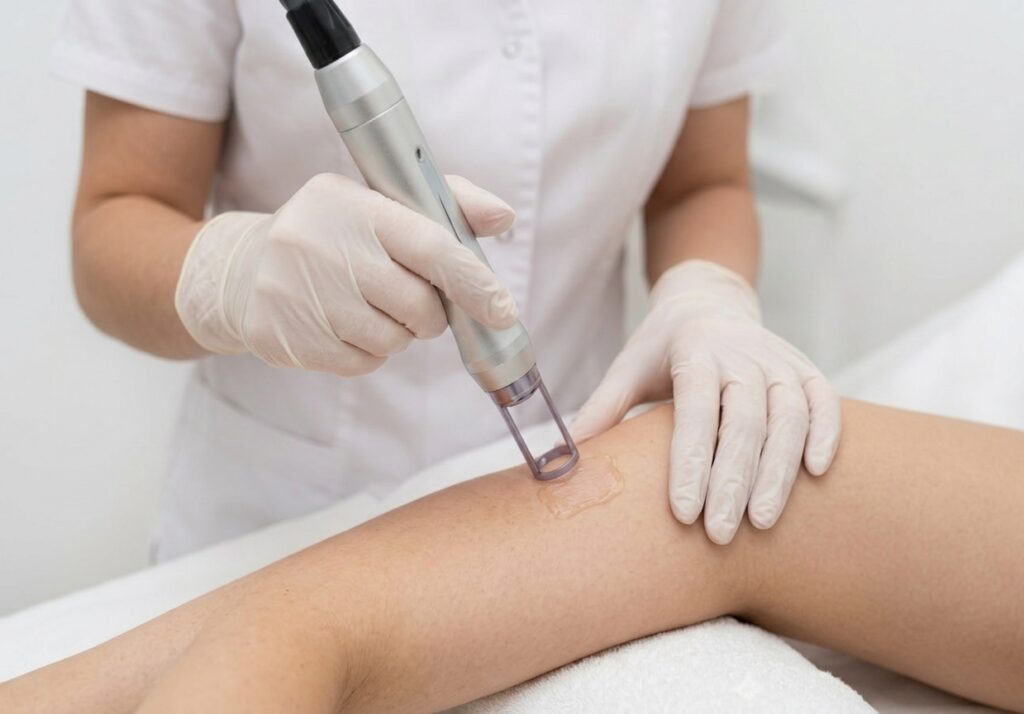
Laser / Light Treatment
Targets brown spots from sun damage. Settings are matched to your skin type.
Microneedling
Improves texture and helps with post-acne marks. It uses mechanical stimulation rather than heat.
Hydrofacial
A no-downtime brightening and hydration treatment, used as maintenance between stronger sessions.
Brightening Skincare & SPF
Brightening and pigment-blocking skincare for home use, plus daily sun protection to protect your results.
Dark Spot and Skin Tone Concerns We Assess
Not sure which type you have? Your free consultation starts with a full pigment assessment. Some patches, such as velvety darkening on the neck, can signal an underlying medical issue, and we will tell you if you should see your doctor first.
- Sun spots and age spots
- Melasma and hormonal pigmentation
- Acne marks (post-inflammatory hyperpigmentation)
- Uneven overall skin tone
- Freckles that have darkened
- Dark patches on the neck, underarms or around the mouth
Skin-Tone Safety
Not Every Dark Spot Is the Same. Find Out Which Type You Have.
Sun spots, melasma and acne marks need different approaches, and a strong laser can make melasma worse. Start with a free assessment.

Darker Skin Tones
Treating Darker Skin Tones Safely
Skin with more melanin reacts more strongly to heat and irritation. Treatment that is too aggressive can leave new dark marks, or occasionally lighter patches. That is why J9 identifies your skin type before choosing any setting.
If a clinic offers you one strong laser session to “erase” melasma, ask how it accounts for your skin type.
- Skin type identified before any setting is chosen
- Gentle peels, microneedling and topicals often preferred
- Conservative light settings, with test spots where appropriate
Is It Right for You?
Is Hyperpigmentation Treatment Right for You?
Most people with sun spots, acne marks or uneven tone are good candidates. A few situations mean waiting, or seeing a physician first.
Usually a good fit if you:
- Have sun spots, acne marks, uneven tone or diagnosed melasma
- Can commit to daily sunscreen. Without it, no treatment will hold.
- Are patient with a gradual series rather than expecting a single-session fix
Postpone, or see a physician first, if you:
- Have a spot that is changing, growing, irregular, bleeding or itching. Any of these needs a skin cancer check before cosmetic treatment.
- Are pregnant or breastfeeding. Many peels, lasers and lightening ingredients are put on hold.
- Have active acne flares, eczema or a sunburn in the area
- Use isotretinoin or medications that make your skin sun-sensitive
The Houston sun rule
UV exposure is high here for most of the year. Wear broad-spectrum SPF 30 or higher every day, reapply it outdoors, and add a hat for longer time outside. For melasma, a tinted mineral sunscreen also helps block visible light. Hot workouts and saunas can trigger melasma flares, so plan your routine with your provider.
Hyperpigmentation Treatment Near Sharpstown, Alief and SW Houston
- Sharpstown
- Alief
- Gulfton
- Missouri City
- Bellaire
- Westwood
- Meyerland
- Stafford
Patients visit from Sharpstown, Alief, Gulfton, Westwood, Bellaire, Meyerland, Stafford and Missouri City. Not sure which type of pigmentation you have? Call +1 281-809-5115 to speak with our team.
Pricing
How Much Does Hyperpigmentation Treatment Cost in Houston?
The cost of hyperpigmentation treatment depends on the type of pigment, the treatments used, the size of the area and the number of sessions. A few sun spots may need only a short series. Melasma or widespread acne marks usually need a longer plan plus maintenance. J9 gives you a written price at your free consultation, before any treatment.
Pigment Type and Depth
Surface sun spots cost less to treat than deep or hormonal pigment.
Treatment Method
Peels and facials cost less per session than laser or light treatments.
Treatment Area
A few spots, the full face, or the neck, chest or hands.
Sessions and Packages
The number of sessions you need. Packages lower the cost per session.
Home Care
Sunscreen and brightening products for daily use at home.
Payment Plans and Insurance
Payment plans are available. Hyperpigmentation treatment is usually considered cosmetic and is not covered by insurance.
What to Expect
How Quickly Will Your Dark Spots Fade?
Results depend on your pigment type, how deep it sits and how consistently you protect your skin from the sun.


Typical Response
Results by Pigment Type
These are general patterns. Your provider will set timelines for your own skin at your consultation.
Sun / age spots
Often visibly lighter after 1–3 sessions.
Acne marks (PIH)
Gradual fading over several months.
Melasma
Slow lightening. Ongoing maintenance is needed, and flares are possible in summer.
How It Works
How Hyperpigmentation Treatment Works at J9
From your first call to long-term maintenance, here is what to expect.
1
Book and Assess
Call +1 281-809-5115 and choose Sharpstown or Bintliff. Your provider reviews your spots, skin type, hormones and medications, sun habits and current products, and takes baseline photos.
2
Plan and Quote
You get the treatment mix, the number of sessions, the at-home routine and the total cost before you start.
3
Treatment Phase
In-clinic sessions are usually spaced several weeks apart, alongside a daily home routine.
4
Maintenance
Once your tone has evened out, occasional sessions and strict sun protection keep pigment from returning.
Why Houston Patients Choose J9 for Dark Spot Treatment
Pigment Type Comes First
Your plan is built on whether you have sun damage, PIH or melasma, not on whichever device is available.
Skin-Tone-Aware Approach
Settings and treatment choices are made with your skin type in mind.
Several Treatments, One Roof
Peels, light treatments, microneedling, hydrofacials and home care are combined as needed.
Written Plan, Honest Limits
You know the sessions and total cost up front. Progress is photo-tracked, and if your pigment needs a dermatologist or medical check first, we will tell you.
Visit J9 in Sharpstown or Bintliff
Same providers, same quality — visit whichever is closer to you
Location 1 — Sharpstown
11861 S Sam Houston Pkwy W, Suite A
- Houston, TX 77031
- Mon–Fri 10AM–6PM · Sat 10AM–3PM · Sun 10AM–2PM
Location 2 — Bintliff
6804 Bintliff Dr
- Houston, TX 77074
- Mon–Fri 10AM–6PM · Sat 10AM–3PM · Sun 10AM–2PM
Free Consultation
Book Your Free Hyperpigmentation Consultation in Houston
Come with clean skin if you can, and bring your current products and a list of your medications. You’ll leave knowing what type of pigmentation you have, which treatments suit your skin tone, how long it should take and what it will cost.
Licensed providers
A licensed provider assesses your pigment type and skin tone.
Two Houston locations
Sharpstown & Bintliff — choose whichever is closer.
Payment plans
Treatment is cosmetic and not covered by insurance, so payment plans are available.
Prefer to call?
+1 281-809-5115
Send us a message
Fill out the form and our team will get back to you as soon as possible. For urgent matters, please call us directly.
By submitting, you agree to be contacted by J9 Clinic and Med Spa regarding your inquiry. We respect your privacy and never share your information.
Hyperpigmentation FAQs
How long does it take to fade dark spots?
Sun spots often lighten within a few sessions. Acne marks and melasma usually take several months of consistent treatment and home care.
Can melasma be permanently removed?
No. Melasma can be lightened and kept under control, but it can return with sun, heat or hormonal changes. Maintenance is part of the plan.
Is laser safe for dark spots on brown or Black skin?
It can be, with the right device, conservative settings and a proper skin-type assessment. Gentler options are often preferred, especially for melasma.
Will my dark spots come back?
Treated sun spots can stay away with daily SPF. New spots can form with new sun exposure, and melasma tends to recur without maintenance.
How should I prepare?
Avoid tanning for at least two weeks. Pause exfoliating acids or retinoids if your provider asks you to. Bring a list of your current skincare products and medications.
Can I get treatment while pregnant?
Most active pigment treatments are postponed during pregnancy and breastfeeding. Your provider can suggest safe sun protection in the meantime.
Do I need a prescription cream?
Some effective lightening ingredients need a prescription. Your provider will discuss whether one is appropriate for you.
Is the consultation free?
Yes. Every new patient gets a complimentary consultation with no obligation.